הגעתי למסגר תמונה וקיבלתי שירות מדהים מזיו. סבלני, מקצועי, אדיב ועם יחס אישי שלא רואים בכל מקום. עזר לי לבחור את המסגרת המתאימה ונתן תחושה שבאמת חשוב לו שהכול ייצא מושלם. ממליצה מאוד לכל מי שמחפש שירות איכותי וחוויית לקוח נעימה. תודה רבה
סיון אגי 5.0 · 94 Google reviews
Framing paintings and artwork
Artwork has needs a photo doesn't. An oil on canvas doesn't want glass pressed against it, a watercolor on paper wants breathing room and framing that won't harm it twenty years from now, and embroidery needs stretching before it even goes into a frame. We work with all of these.
Walk in during opening hours. Free parking, no appointment needed. Rather ask first? Message us on WhatsApp.
- Studio in Rishon LeZion
- Most jobs ready within two business days
- Personal advice, 30 years of experience
- Bring your piece to the studio
- Choose a frame and get a quote on the spot
- Pick it up when it is ready
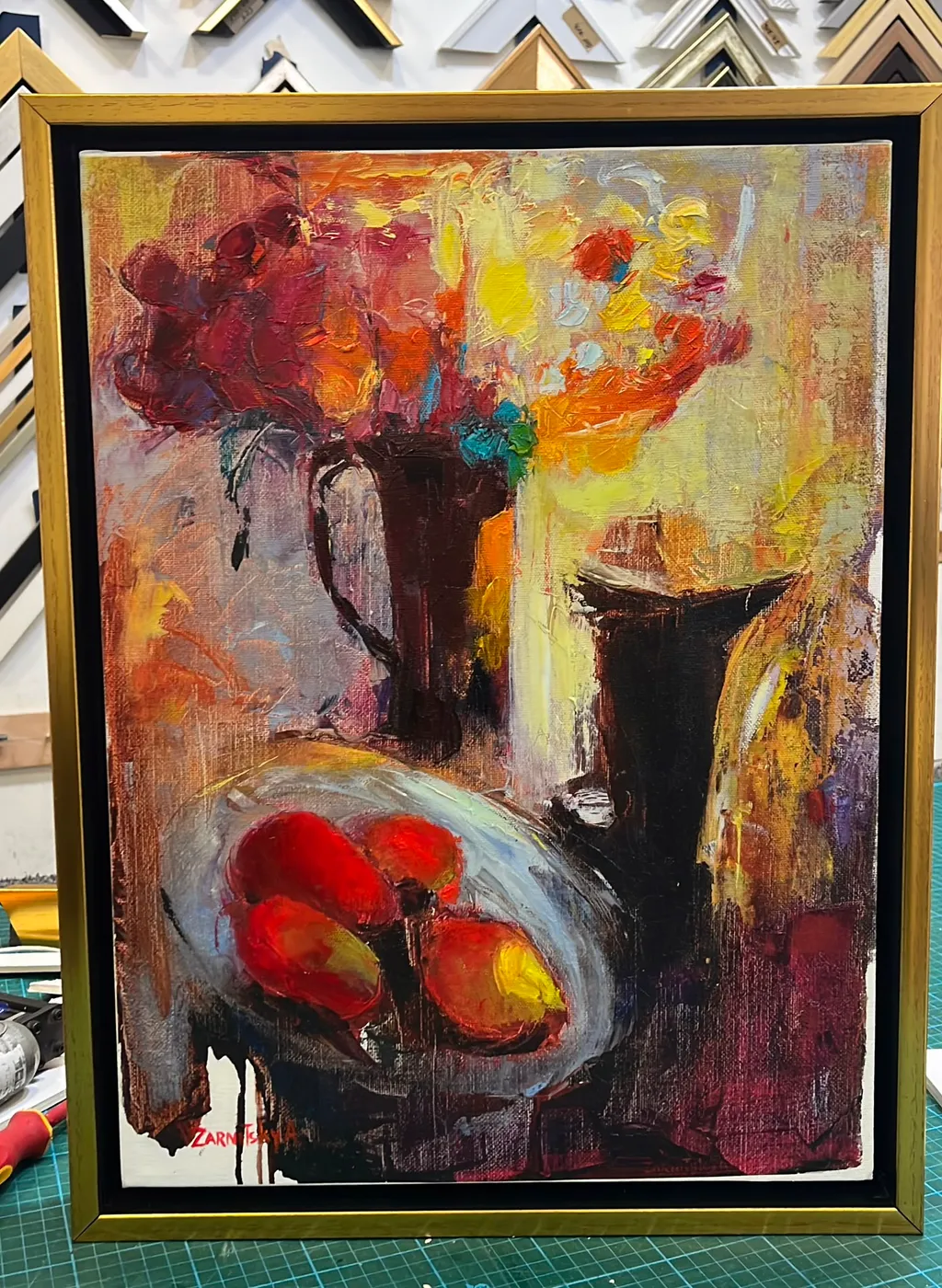
Oil and acrylic paintings
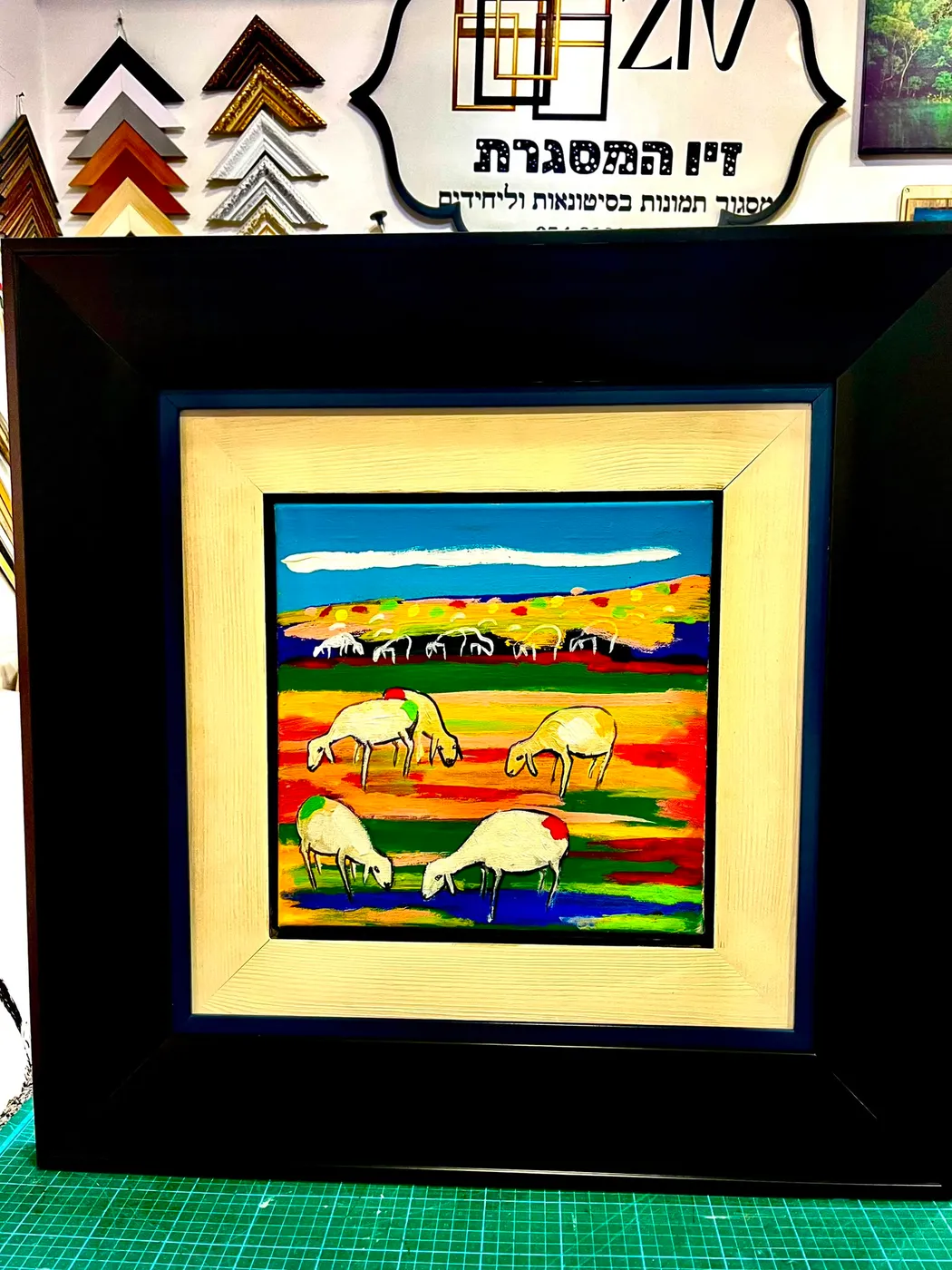
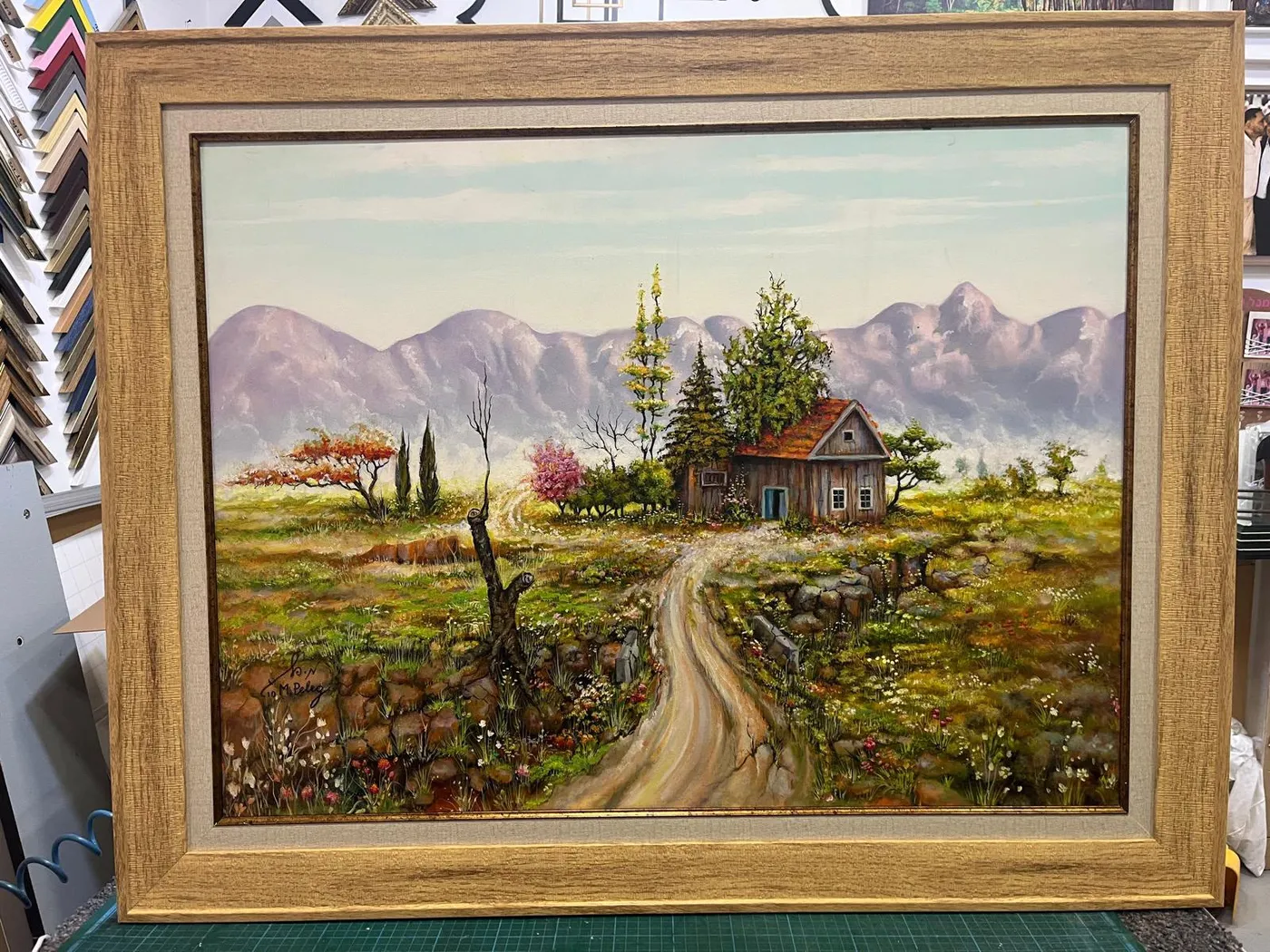
An oil painting on canvas is usually framed with no glass at all. The paint needs to breathe, and glass both reflects light and can make unwanted contact with the paint surface. Instead we use a frame that surrounds the canvas directly, sometimes with a deliberate gap around it.
For a painting on stretched canvas, a floater frame is often the most beautiful solution: it leaves a thin gap around the canvas, shows off its depth and makes the work look as if it is floating inside the frame. See our floater frame page.
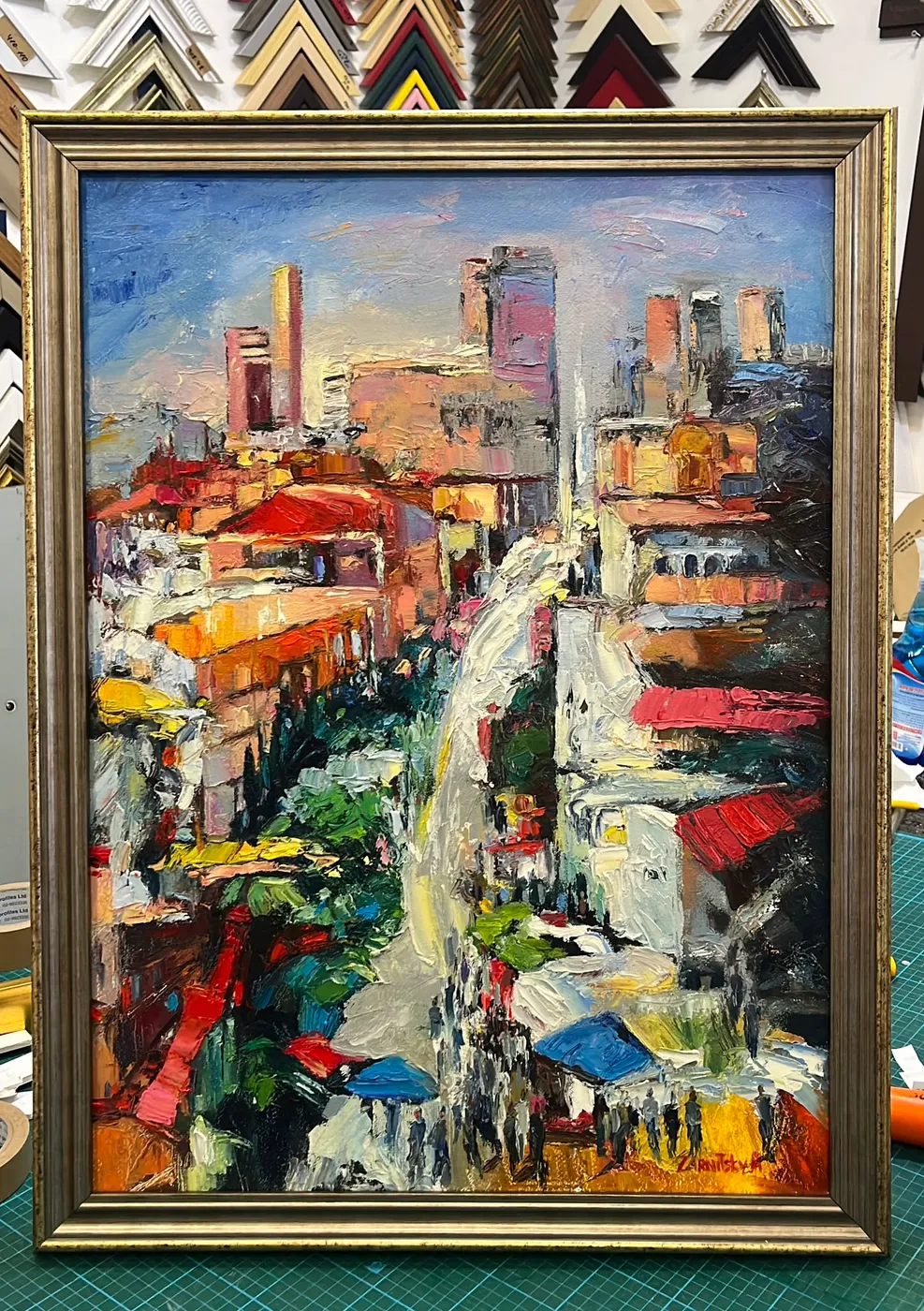
For a painting on board or Masonite you can also go for a classic, close-fitting frame with a molding that has presence, especially for traditional-style work. The gallery here includes real oil paintings from the studio in both styles.
Watercolors, drawings and works on paper
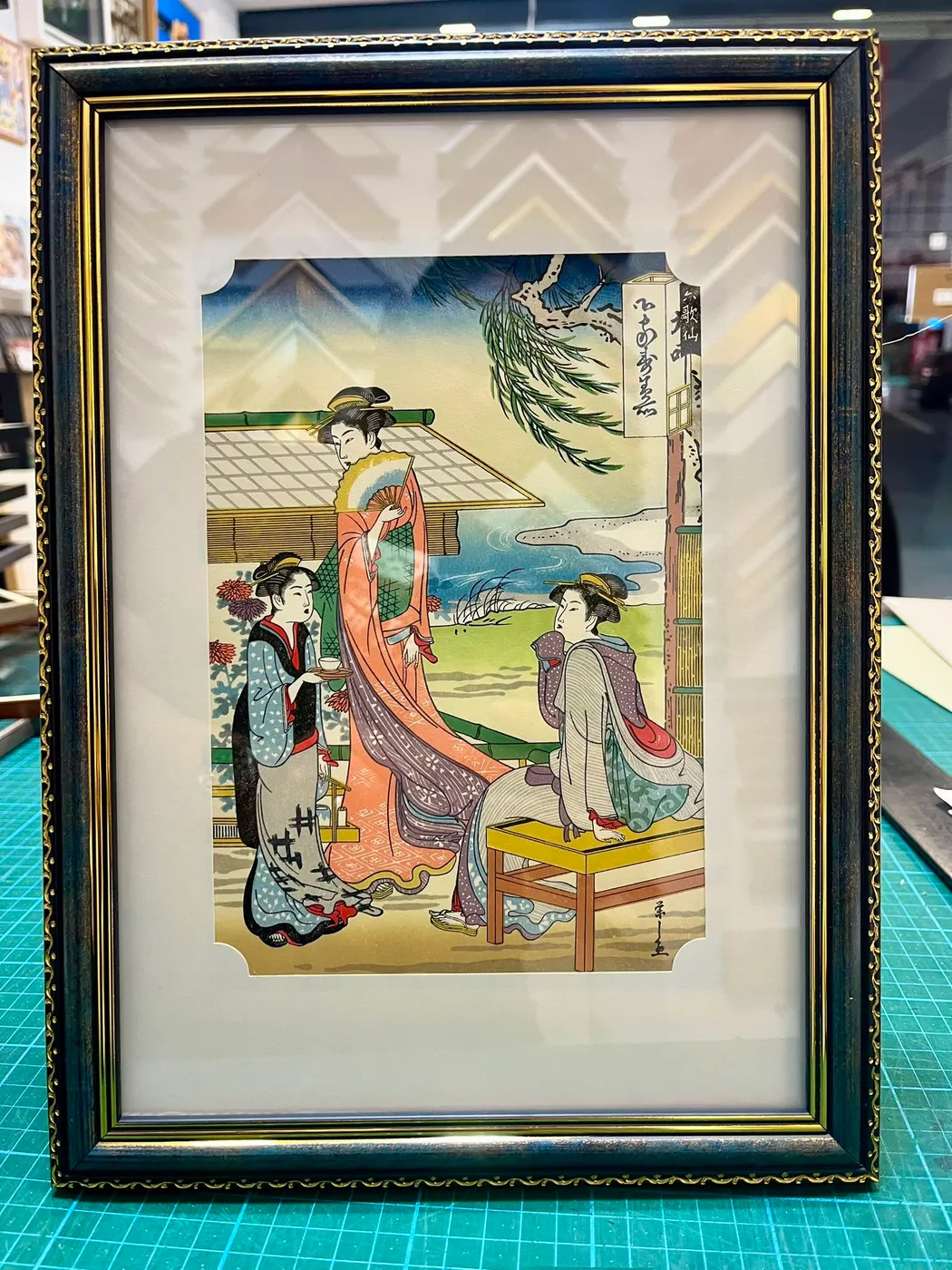
Here the logic is the complete opposite. A work on paper does need glass, but it must never touch it: paper pressed against glass for years absorbs moisture and can stick to it, and in an original that damage is irreversible.
The solution is a mat (passe-partout), whose thickness creates the physical gap. With works on paper it isn't an aesthetic upgrade; it is part of the framing itself.
For watercolors and drawings a fairly wide mat in off-white or cream is the norm. It gives the work calm and space, and doesn't compete with delicate tones that are soft to begin with. For artists who plan to exhibit or sell, it is also what buyers expect.
Embroidery, needlepoint and textile work
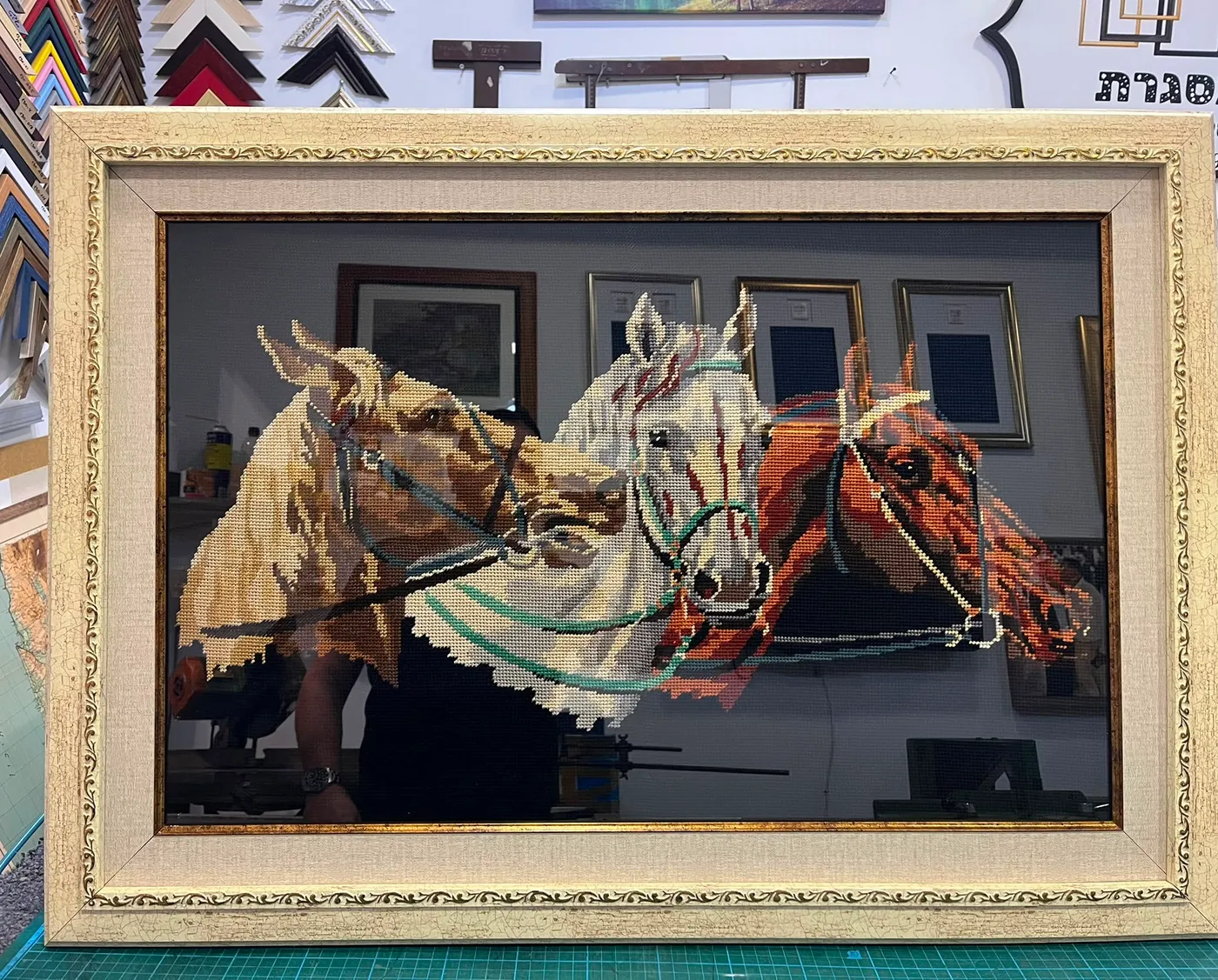
Embroidery and needlepoint need a step that works on paper don't: stretching. The fabric has to be stretched over a board before it goes into the frame, otherwise it slips and forms waves inside the frame before long.
The stretching is done without gluing the fabric or permanently piercing it. For a piece someone spent months on, that is not a technical detail.
Here too we leave a gap from the glass: fabric has volume, and glass pressing on it flattens the texture that is the whole point. The gallery here includes a framed needlepoint from the studio.
Conservation: what we do and what we don't
With an original that has no copy, the materials touching it matter. We use acid-free framing (backing and contact materials that don't pass acidity to the paper or speed up yellowing) and mount reversibly, without gluing the work to the backing. It can be taken out later without damage.
What we don't offer is museum glass or UV-filtering glass. We work with good-quality regular glass, which gives good protection and full clarity, and that is the right choice for the vast majority of work.
That is why it is worth talking about where it will hang. An original is sensitive to fading, and a wall facing a window with direct sun or a strong light fixture is the worst place for it. Sometimes the most effective fix is simply moving it a meter to the side, and that is something we can discuss when you come in.
For artists: series and exhibitions
An artist preparing an exhibition or a series needs something different from a private customer with one painting: consistency across the works, and a price that holds when it is ten frames rather than one.
We work with artists on series: the same molding, the same mat and the same finish across every piece, so the hang reads as one body of work. For larger quantities, it is also worth looking at our wholesale frames page.
We also sell blank stretched canvas for painting, for artists who would rather buy a ready canvas than stretch their own; see our blank canvas page. And if you painted on rolled canvas and need someone to stretch it, that is our canvas stretching page.
How to order
Bring the work to the studio at 3 Naftali Palatin St., Booth 147, Rishon LeZion. No appointment is needed, and there is free parking nearby. We lay the work on the table, hold molding and mat samples against it, and see what works. That is the part that really decides the result, and it doesn't work through a screen.
If the work is large, fragile or old, tell us when you come in. There is a difference between a piece that can be handled freely and one you want touched as little as possible.
Most jobs are ready within two business days; for series and large works we'll tell you the turnaround in advance.
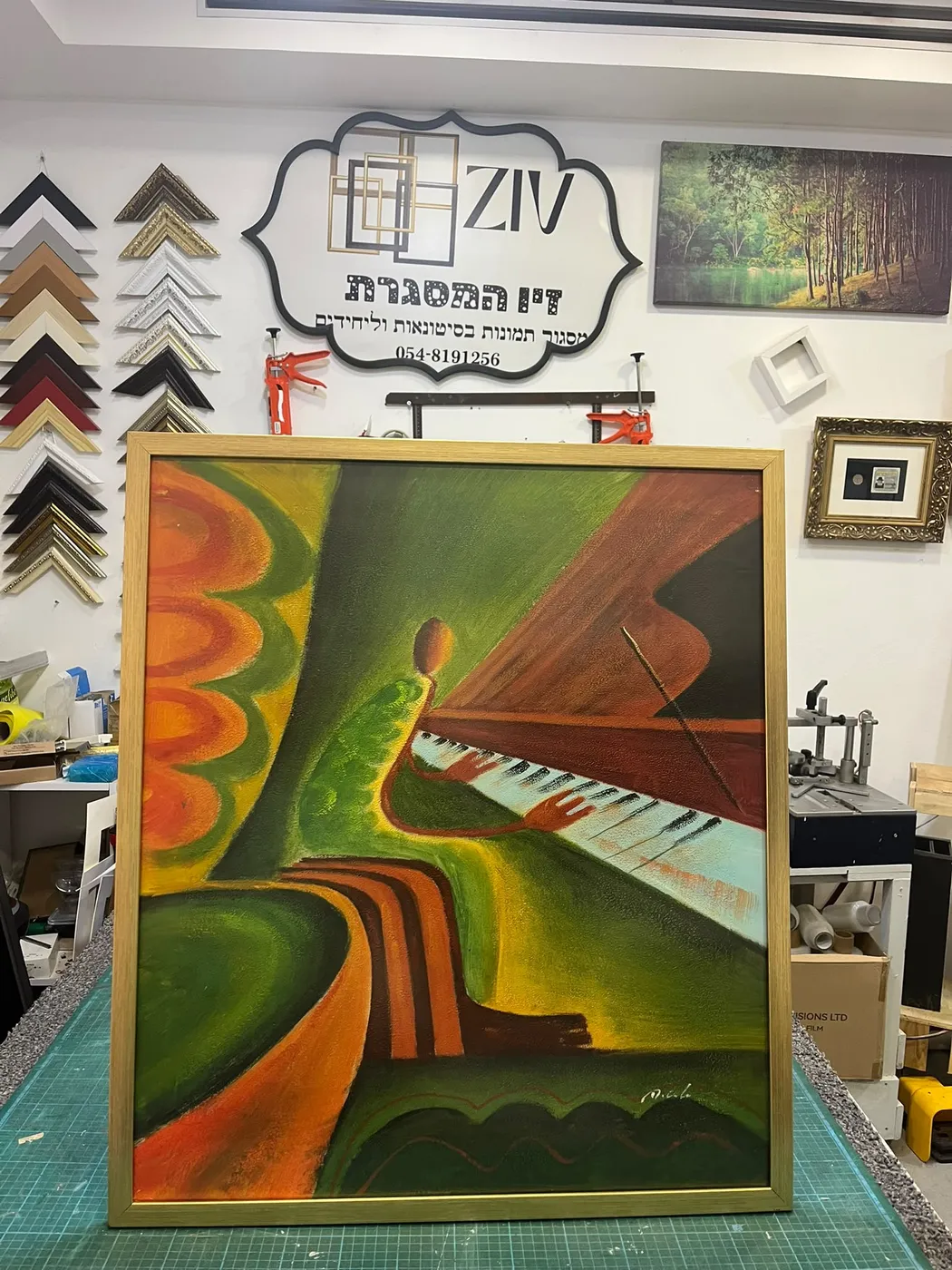
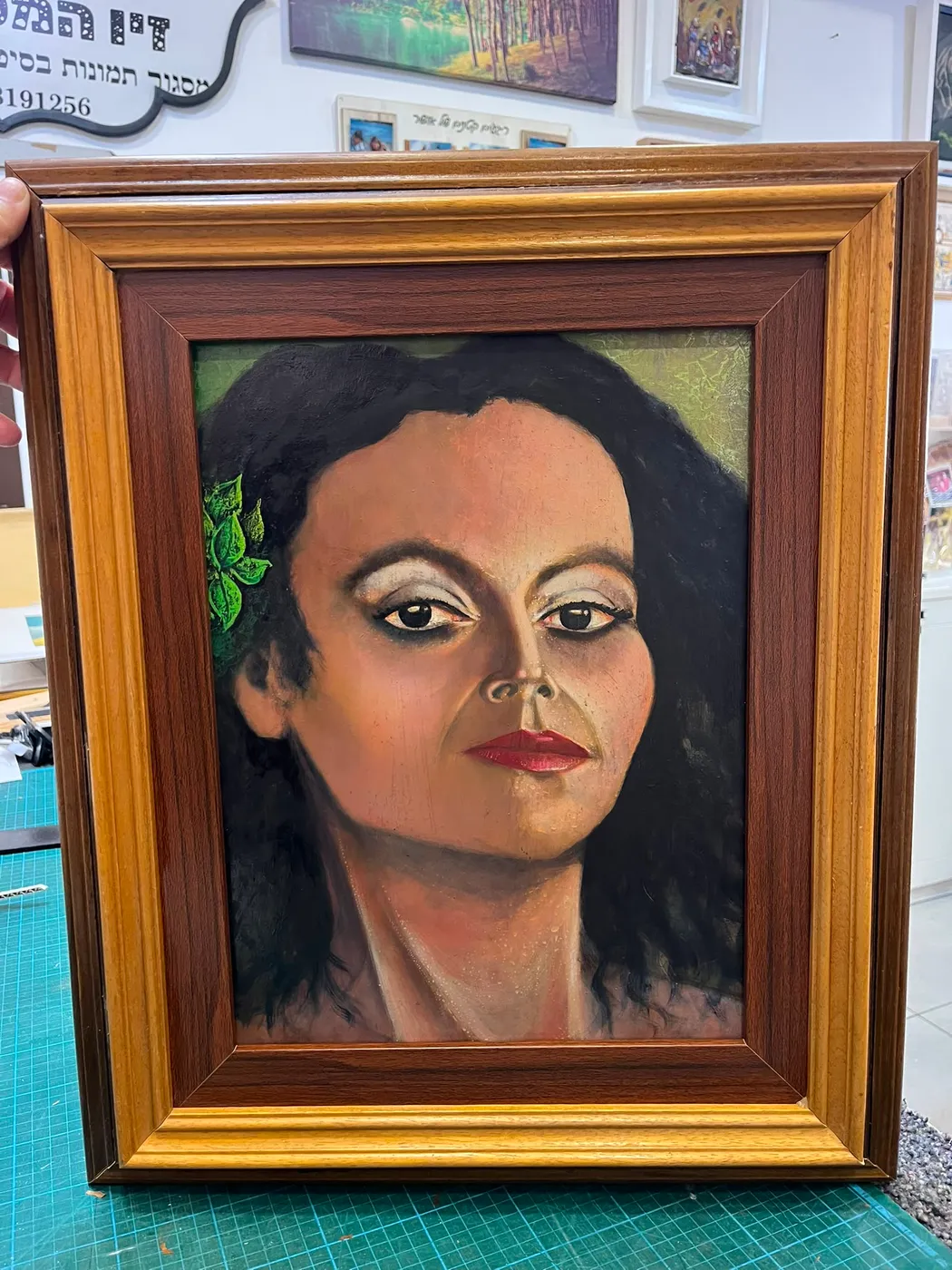
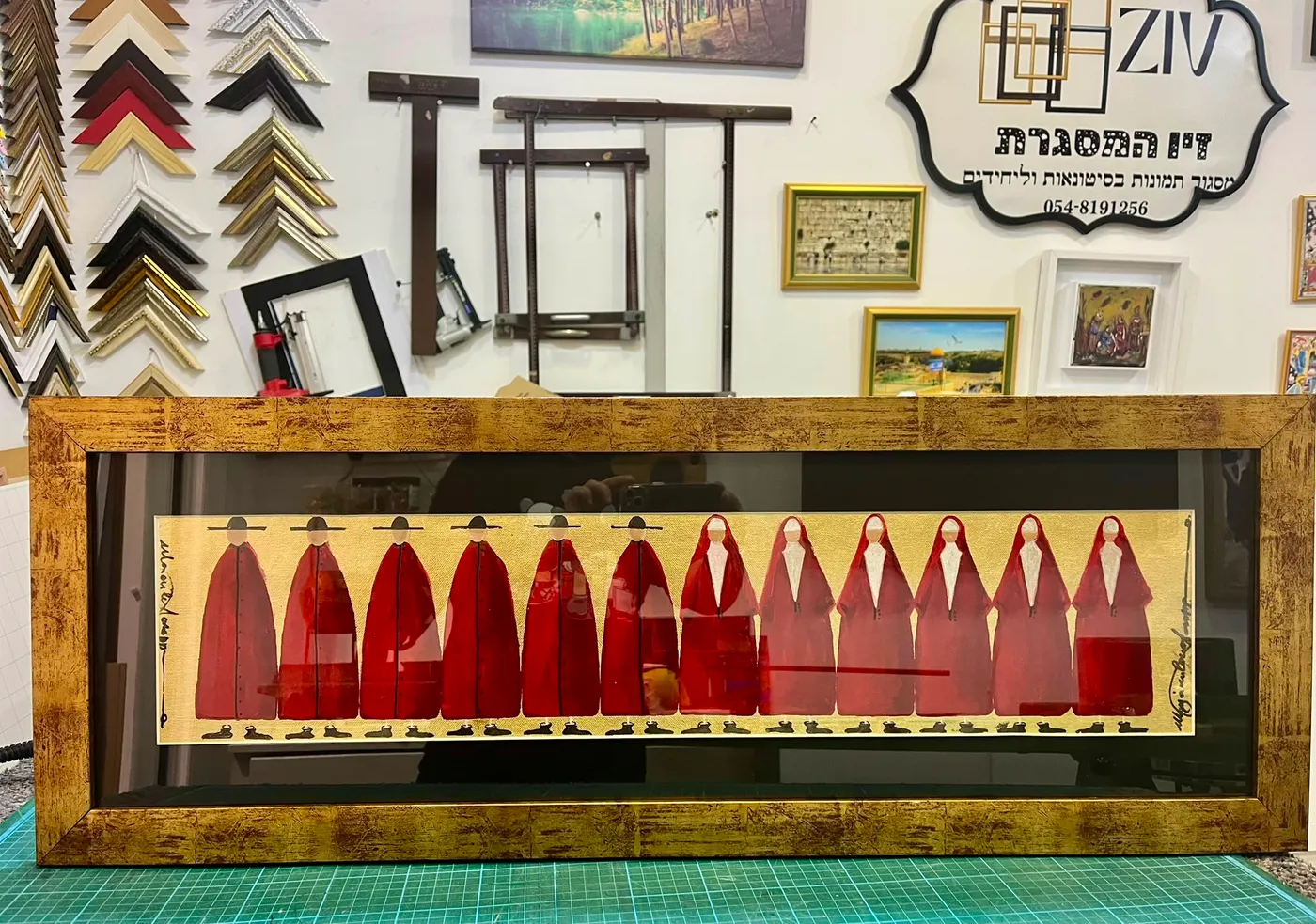
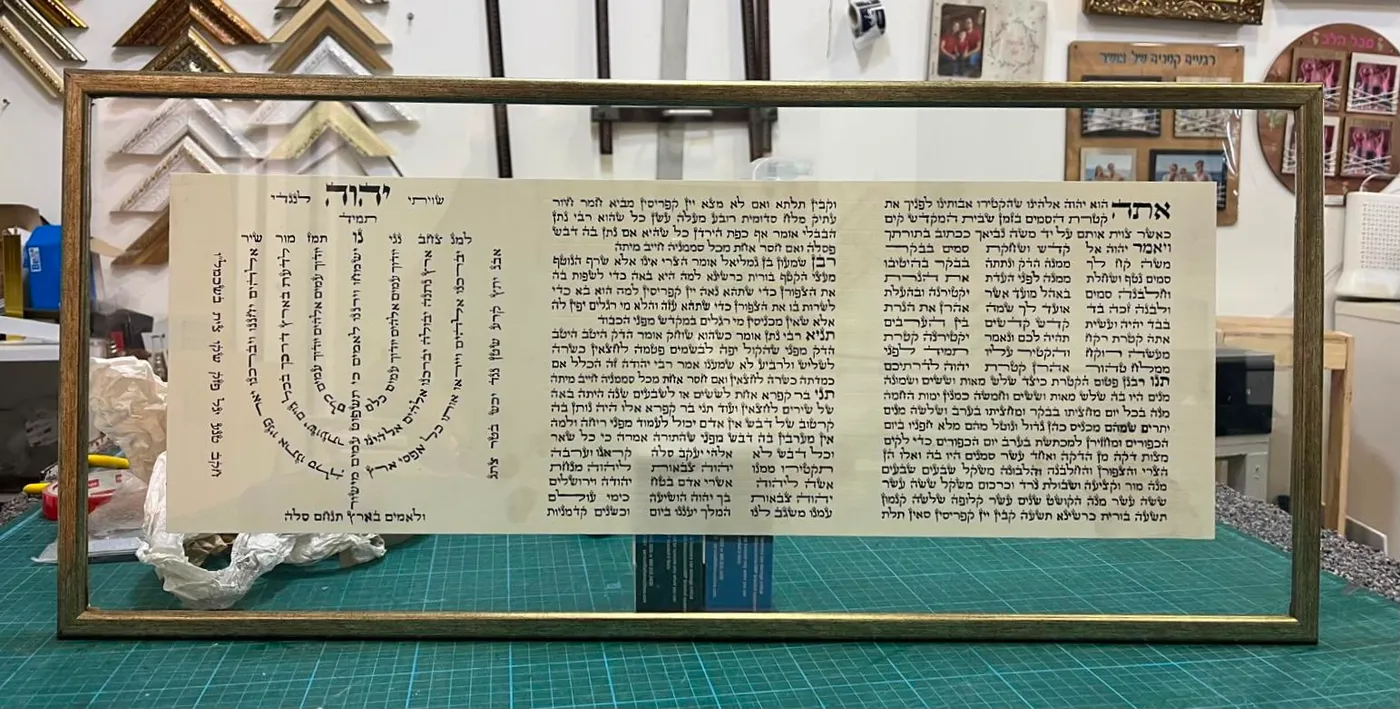
Framed paintings and artwork: work from the studio
What our customers say
Reviews are shown in their original Hebrew, as posted on Google.
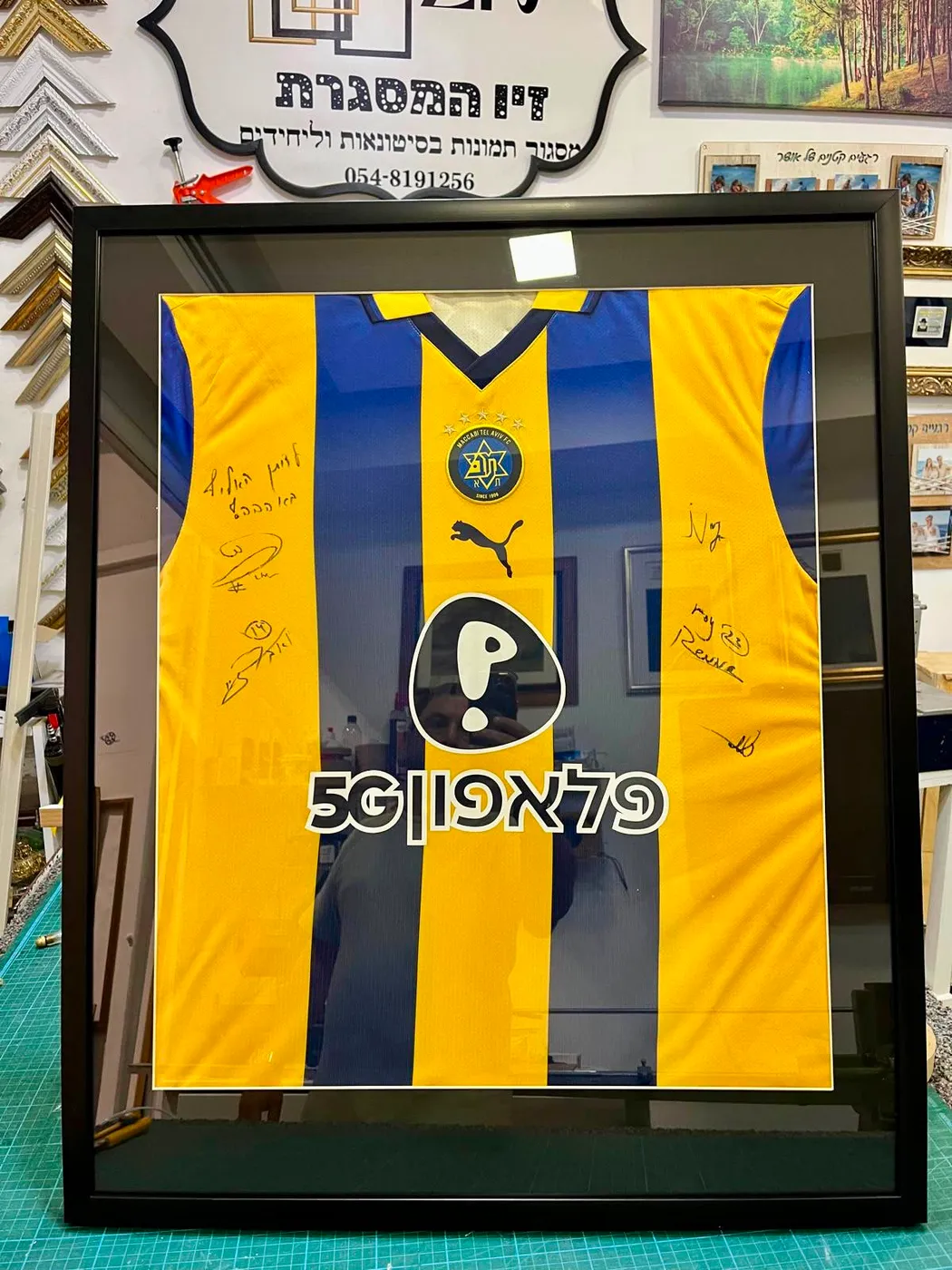
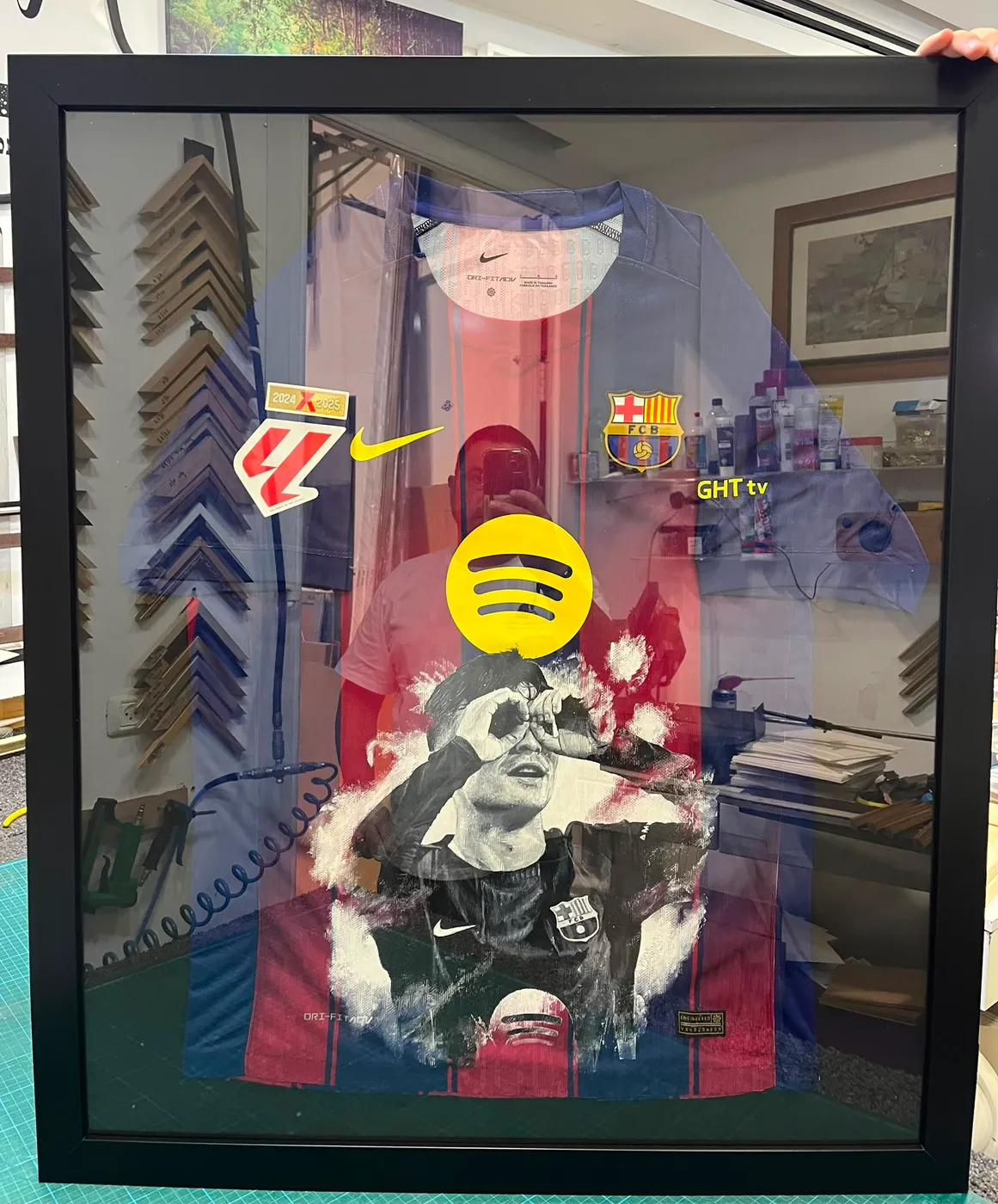
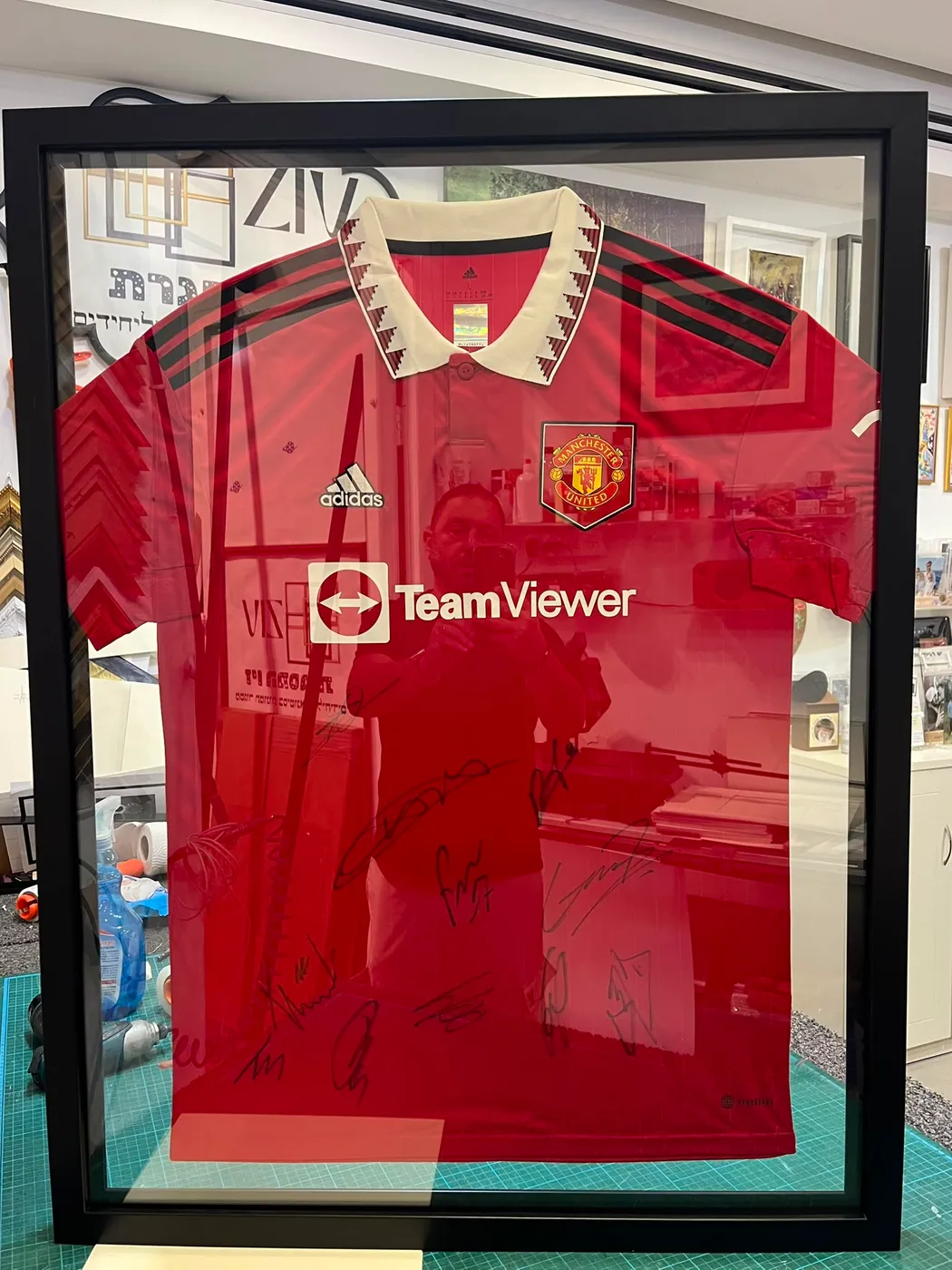
חוויית שירות מעולה מההתחלה ועד הסוף. קיבלתי מענה מהיר ומקצועי, עם יחס אדיב ונכונות אמיתית לבוא לקראתי. המחיר הוגן ושווה כל שקל. הזמנתי מסגרת לחולצה והתוצאה הסופית פשוט אליפות – עבודה מדויקת ואיכותית. ממליץ בחום לכל מי שמחפש עבודה ברמה גבוהה וראש שקט
שליו אברגילהגעתי דרך גוגל וגיליתי את זיו אדם אדיב ונחמד ישבנו לקפה עזר לי להתאים את המסגרת שמתאימה בול לציור שלי ממליץ בחום
יגאל מורמדהים!!!! מקום מדהים! זיו שירותי מאד ! מחירים הוגנים ובדקתי כמה חנויות. ממש ממש מרוצה
ספיר כהןשירות ואיכות ברמה הכי גבוהה שיש!!
Tomas Siעבודה מקצועית, שירות אדיב
Barry GreenOur work
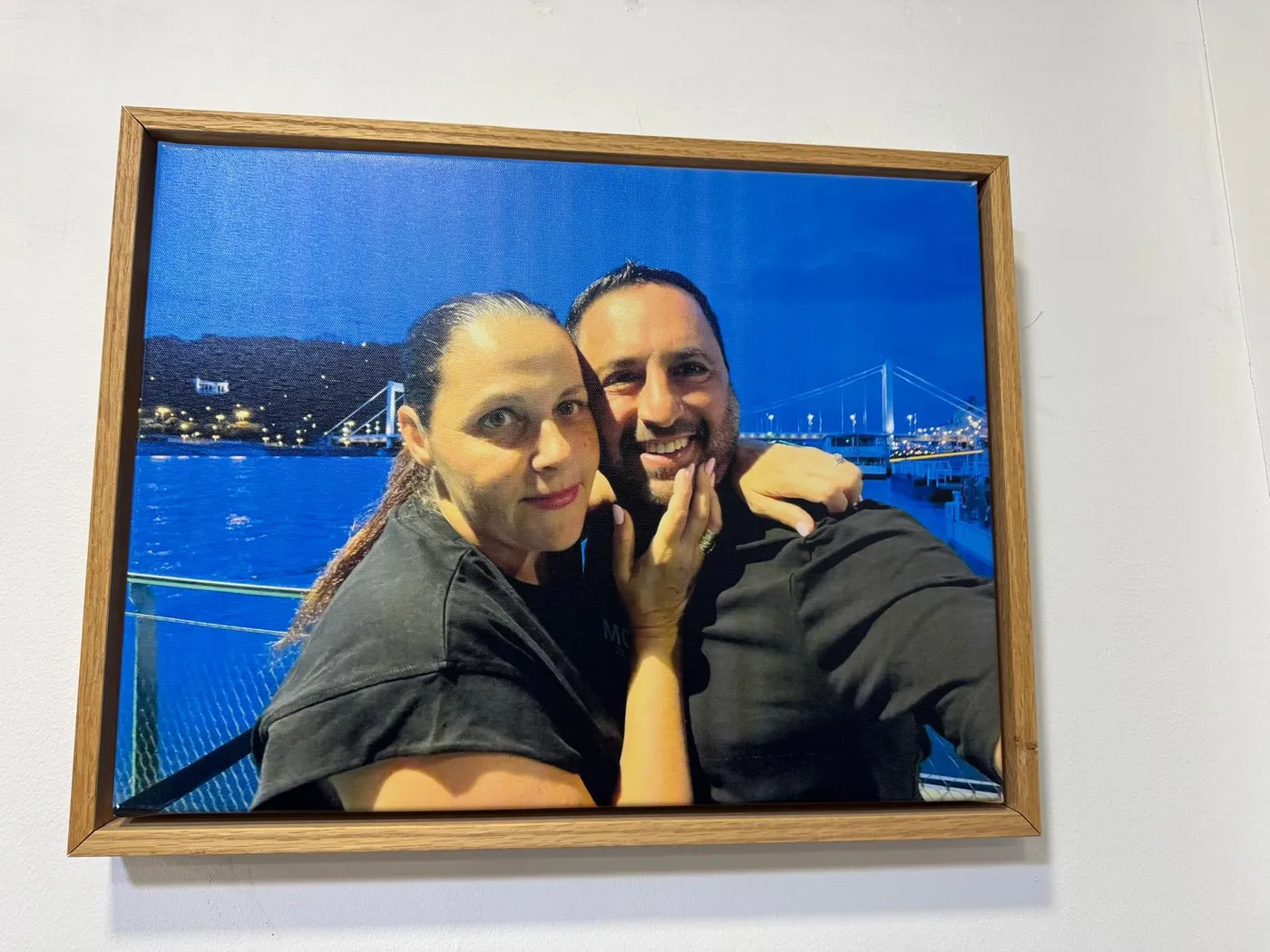
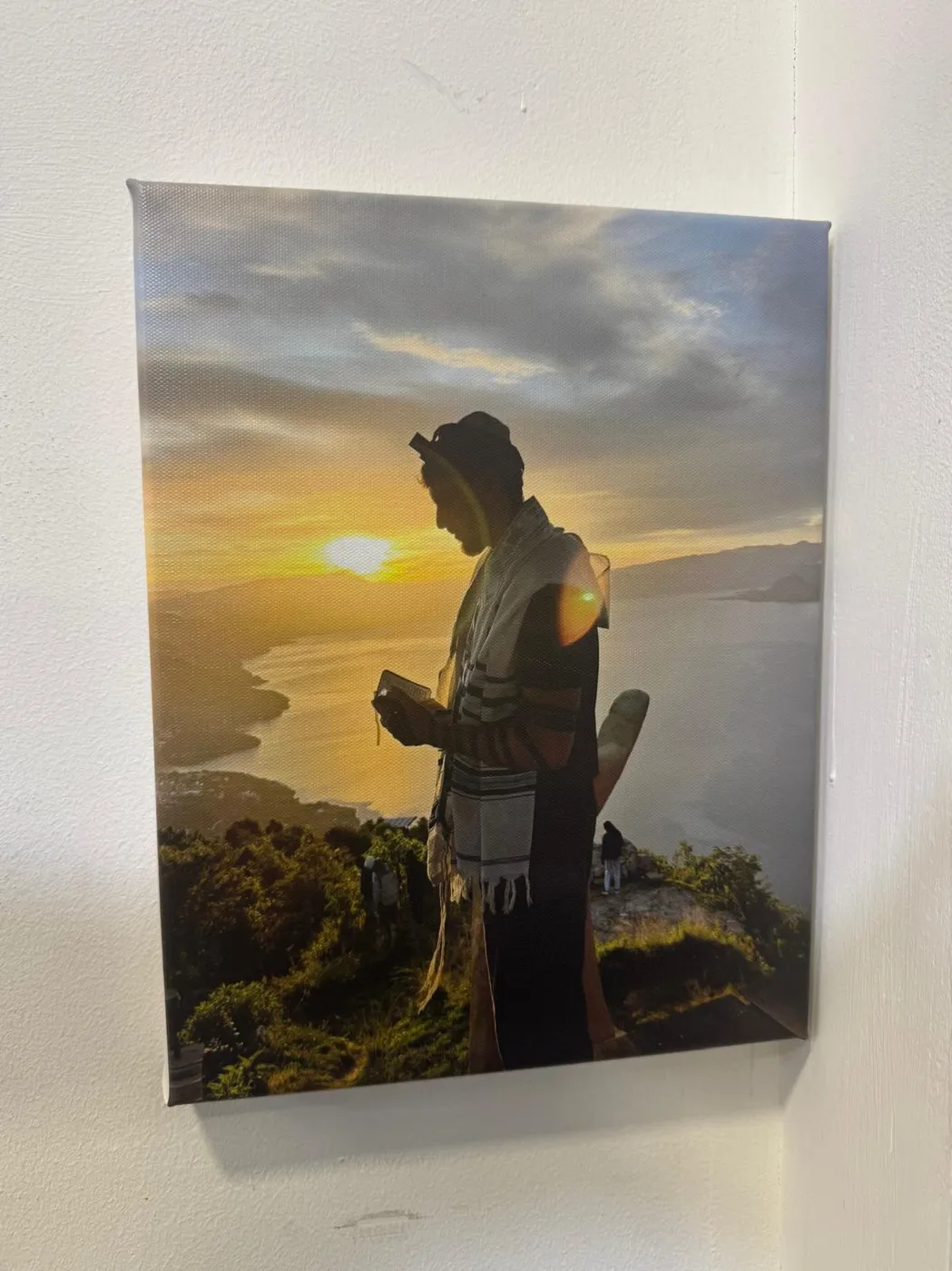
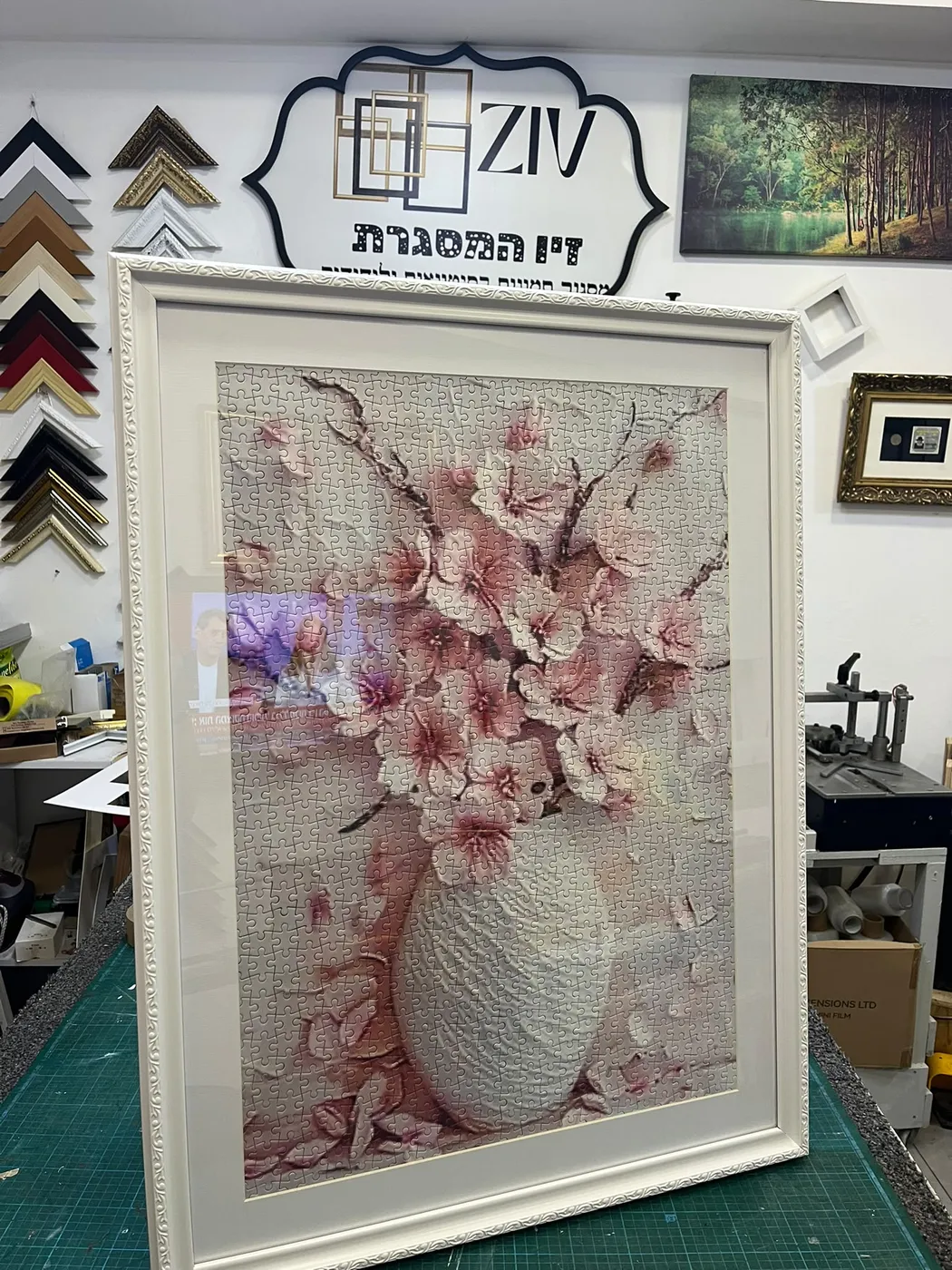
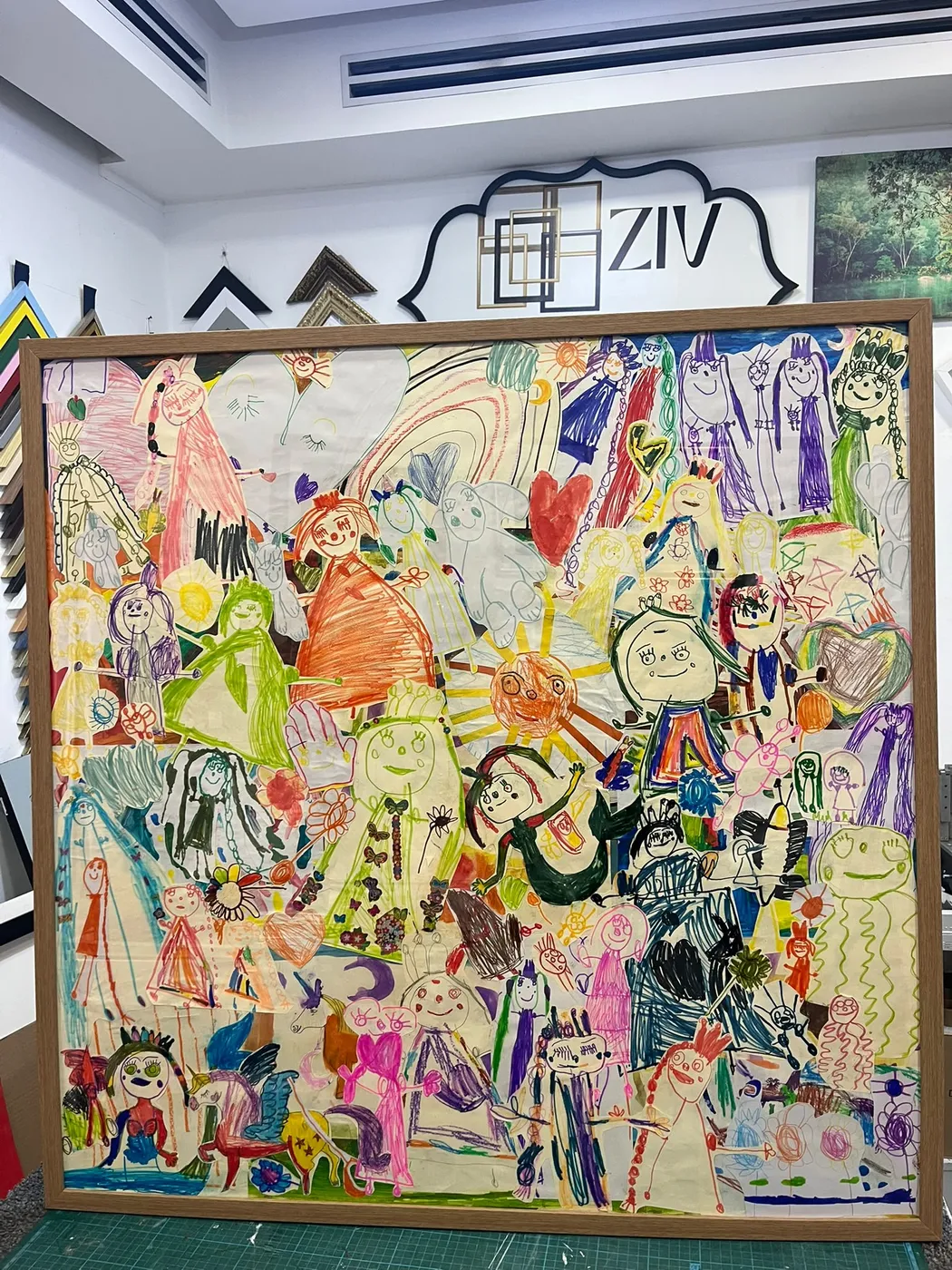

Frequently asked questions
Does an oil painting need glass?
Usually not. The paint needs to breathe, and glass reflects light and can make unwanted contact with the paint surface. For an oil on stretched canvas, a floater frame is often the most beautiful solution.
How do you frame a watercolor without damaging it?
With a mat, whose thickness creates a gap between the paper and the glass, and with reversible mounting and no glue. For an original, acid-free framing is also worth it.
Can you frame embroidery or needlepoint?
Yes. The fabric is stretched over a board before it goes into the frame so it doesn't form waves, and we leave a gap from the glass so the texture isn't flattened.
Do you have museum glass?
No. We work with good-quality regular glass that gives good protection and full clarity. For work that is sensitive to fading, we'll talk about where it will hang, which is usually the factor that matters most.
Do you work with artists on series?
Yes: the same molding, mat and finish across every piece, so the hang reads as one body of work. For larger quantities, also look at our wholesale frames page.
How much does it cost to frame a painting?
It depends on the size, the type of work, the molding and whether a mat or acid-free framing is needed. Bring the work to the studio and you get an exact quote in front of it.
Sources and further reading
- CCI Note 11/9: Framing Works of Art on Paper Canadian Conservation Institute: how a frame package is built, with acid-free backing and a spacer that keeps the work away from the glass.
- CCI Note 11/3: Glazing Materials for Framing Works on Paper Canadian Conservation Institute: a comparison of glass and acrylic, and filtering UV radiation in the 300–400 nm range.
More services
How to find the studio
3 Naftali Palatin St., Booth 147, Rishon LeZion